
Marin Lotus Car Service
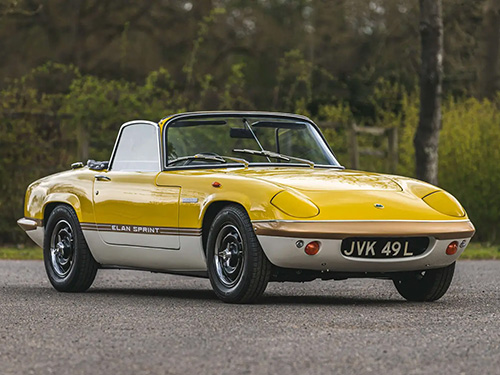
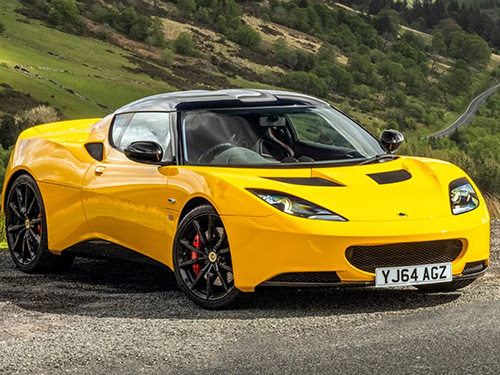
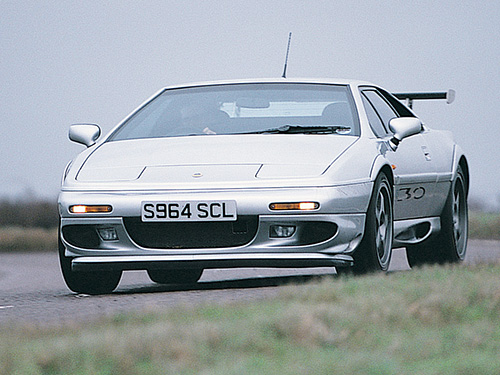
From the Esprit to Elan, Europas, Elites, Exiges and Elise, we have comprehensive mechanical and electrical expertise related to all aspects of Lotus Cars. Our practical working knowledge spans new, classic, and vintage models. Our mechanics have specialist training and equipment to diagnose, repair, restore and maintain these vehicles. If your car's name begins with the lettter "E" and has a yellow badge on the bonnet, we have you covered. Lotus Specialists.
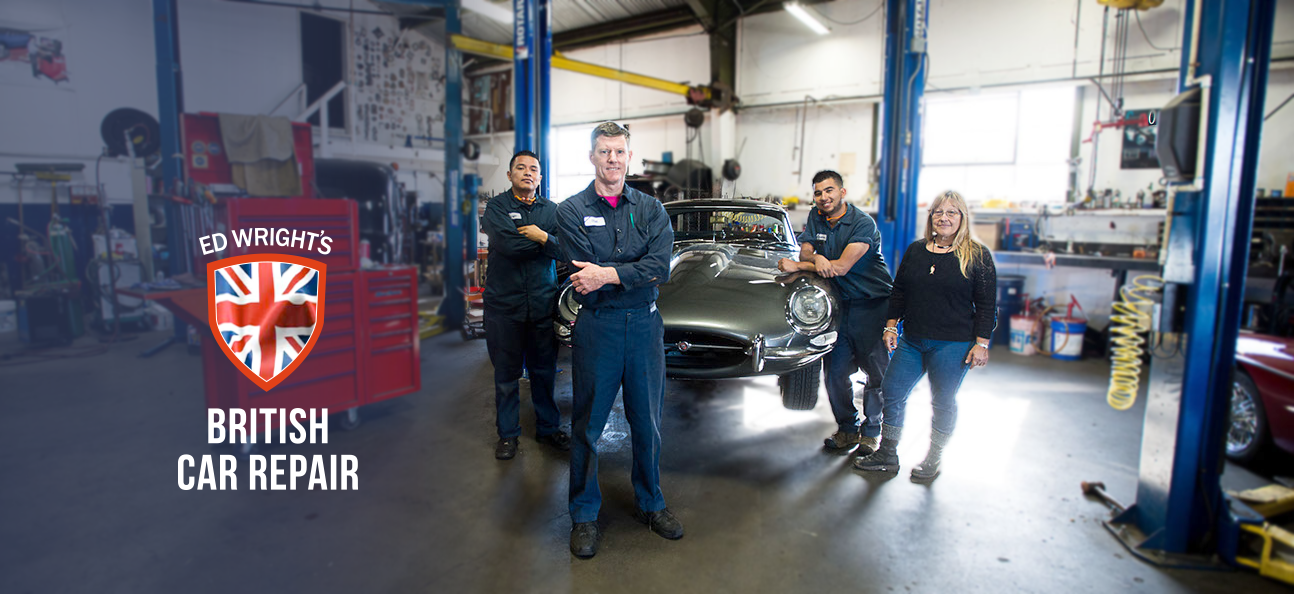
When Ed Wright established British Motor Mechanics in San Francisco the year was 1960. In 1972, the shop was moved to San Rafael, and renamed British Car Repair. We have been busy maintaining and repairing English cars for nearly 50 years. Clint, grew up locally, attended Stanford University and then returned to run the business. As a second generation family business we have developed close ties with customers and the community and continue to provide the best service possible.
We look forward to meeting you, discussing your car and as always, supplying a written cost estimate for services in advance. We enjoy complete classic car restoration projects. Please ask us for a tour of some of our recent projects.
We look forward to meeting you, discussing your car and as always, supplying a written cost estimate for services in advance. We enjoy complete classic car restoration projects. Please ask us for a tour of some of our recent projects.
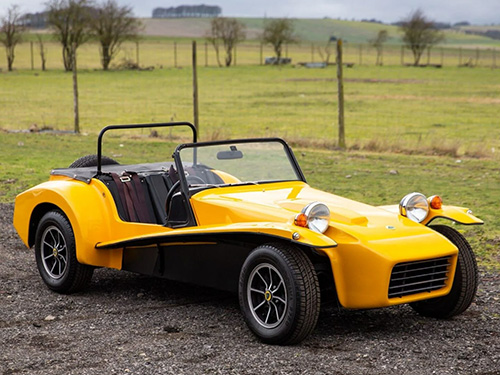
Lotus Service
Lotus Elise- high performance, small package
Elise
1996 -2021
The Lotus Elise is a renowned, lightweight British sports car celebrated for its exceptional handling, pure driving experience, and minimalist design. Has since been replaced by the Lotus Emira.
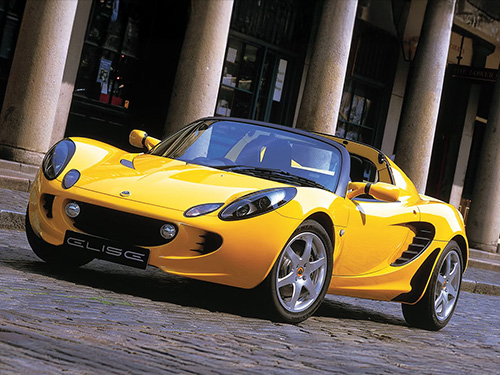
The driving experience of the Lotus Elise is centered on a philosophy of "adding lightness," as advocated by Lotus founder Colin Chapman. This results in a raw, engaging connection between the driver and the road, as the car generally lacks power steering and advanced electronic driver aids.
Lightweight Construction: The car features a fiberglass body shell on a bonded, extruded aluminum chassis, which provides a rigid platform while keeping weight to a minimum (early models weighed as little as 725 kg).
Mid-Engine, Rear-Wheel Drive: This layout is central to its superb balance and agility, allowing it to corner with precision and speed that rivals cars with much more power.
Engines: Early models used Rover K-series engines, while later Series 2 and 3 models switched to reliable Toyota-sourced 1.8-litre engines (both naturally aspirated and supercharged versions).
Performance: Depending on the model, acceleration from 0-60 mph ranges from around 6 seconds for early base models to as quick as 3.8 seconds for high-performance "Cup" variants.
Interior: The interior is minimalist and functional, with exposed aluminum elements and lightweight seats. Creature comforts like air conditioning or a high-end stereo were often optional extras, prioritizing the driving experience over luxury.
Model EvolutionOver its 25-year production run, the Elise evolved through three main series (S1, S2, and S3), with numerous special editions and performance variants.
Series 1 (1996-2001): The original, purest expression of the concept, known for its groundbreaking lightness and delicate handling. Engine options included the 1.8L Rover K-series with varying power outputs.
Series 2 (2001-2010): Featured updated styling, improved ingress/egress with lower sills, and a gradual transition from Rover to Toyota engines, introducing more power and reliability.
Series 3 (2010-2021): A face-lifted version of the S2, it incorporated further design tweaks, new engine options (including a 1.6L for European emissions standards and powerful supercharged 1.8L units), and modern features like a TFT digital dashboard in later Final Editions.generations since the relaunch (R50/R53, R56, F56, F66).
COMMON ISSUES
Engine and Powertrain
Maintenance issues vary significantly based on the engine series:
Rover K-Series (S1 and early S2): Infamous for Head Gasket Failure (HGF), often caused by cooling system leaks or faulty thermostats. Cambelts must be replaced every 4 years regardless of mileage.
Toyota Engines (late S2 and S3): Generally highly reliable, but early 2ZZ engines can suffer from camshaft wear (wiped cams) if driven hard before the oil is fully warmed up.
Oil Cooler Lines: A major safety recall affected models built between 2007 and 2011; if oil lines detach, it can cause engine fires.
Gearbox: Some Toyota-based models may jump out of 5th gear or experience "sloppy" shifts due to worn cables.
Cooling SystemThe cooling system is the most critical area for preventative maintenance across all models.
Radiator Failure: The original plastic-ended radiators are prone to cracking or leaking over time. Many owners replace these with all-aluminum units for better reliability.
HVAC Resistor Pack: The heater fan often fails due to moisture exposure. Repairing this is labor-intensive, as it often requires removing the front clamshell.
Chassis and SuspensionThe Elise’s handling depends on tight tolerances that wear out over time.
Suspension Wear: Bushings, ball joints, and dampers wear quickly if the car is used on tracks. Rear toe links are a known weak point and are frequently upgraded to aftermarket reinforced versions.
Footwell Corrosion: Early models (S1 and early S2) with synthetic mats can suffer from cosmetic corrosion on the aluminum floor panels.
Galvanic Corrosion: Steel suspension mounting points can corrode where they meet the aluminum chassis, especially on cars driven in winter.
Body and InteriorFiberglass "Clams": The body panels (clams) are expensive and difficult to repair. Check for "star cracks" from small impacts and paint bubbling from moisture trapped under the fiberglass.Leaks: Soft-top roofs are rarely 100% waterproof, particularly on Series 1 models, leading to damp interiors if not garaged.
Electrical Concerns: Immobilizers, central locking, and window motors are common points of failure as the cars age.
Lightweight Construction: The car features a fiberglass body shell on a bonded, extruded aluminum chassis, which provides a rigid platform while keeping weight to a minimum (early models weighed as little as 725 kg).
Mid-Engine, Rear-Wheel Drive: This layout is central to its superb balance and agility, allowing it to corner with precision and speed that rivals cars with much more power.
Engines: Early models used Rover K-series engines, while later Series 2 and 3 models switched to reliable Toyota-sourced 1.8-litre engines (both naturally aspirated and supercharged versions).
Performance: Depending on the model, acceleration from 0-60 mph ranges from around 6 seconds for early base models to as quick as 3.8 seconds for high-performance "Cup" variants.
Interior: The interior is minimalist and functional, with exposed aluminum elements and lightweight seats. Creature comforts like air conditioning or a high-end stereo were often optional extras, prioritizing the driving experience over luxury.
Model EvolutionOver its 25-year production run, the Elise evolved through three main series (S1, S2, and S3), with numerous special editions and performance variants.
Series 1 (1996-2001): The original, purest expression of the concept, known for its groundbreaking lightness and delicate handling. Engine options included the 1.8L Rover K-series with varying power outputs.
Series 2 (2001-2010): Featured updated styling, improved ingress/egress with lower sills, and a gradual transition from Rover to Toyota engines, introducing more power and reliability.
Series 3 (2010-2021): A face-lifted version of the S2, it incorporated further design tweaks, new engine options (including a 1.6L for European emissions standards and powerful supercharged 1.8L units), and modern features like a TFT digital dashboard in later Final Editions.generations since the relaunch (R50/R53, R56, F56, F66).
COMMON ISSUES
Engine and Powertrain
Maintenance issues vary significantly based on the engine series:
Rover K-Series (S1 and early S2): Infamous for Head Gasket Failure (HGF), often caused by cooling system leaks or faulty thermostats. Cambelts must be replaced every 4 years regardless of mileage.
Toyota Engines (late S2 and S3): Generally highly reliable, but early 2ZZ engines can suffer from camshaft wear (wiped cams) if driven hard before the oil is fully warmed up.
Oil Cooler Lines: A major safety recall affected models built between 2007 and 2011; if oil lines detach, it can cause engine fires.
Gearbox: Some Toyota-based models may jump out of 5th gear or experience "sloppy" shifts due to worn cables.
Cooling SystemThe cooling system is the most critical area for preventative maintenance across all models.
Radiator Failure: The original plastic-ended radiators are prone to cracking or leaking over time. Many owners replace these with all-aluminum units for better reliability.
HVAC Resistor Pack: The heater fan often fails due to moisture exposure. Repairing this is labor-intensive, as it often requires removing the front clamshell.
Chassis and SuspensionThe Elise’s handling depends on tight tolerances that wear out over time.
Suspension Wear: Bushings, ball joints, and dampers wear quickly if the car is used on tracks. Rear toe links are a known weak point and are frequently upgraded to aftermarket reinforced versions.
Footwell Corrosion: Early models (S1 and early S2) with synthetic mats can suffer from cosmetic corrosion on the aluminum floor panels.
Galvanic Corrosion: Steel suspension mounting points can corrode where they meet the aluminum chassis, especially on cars driven in winter.
Body and InteriorFiberglass "Clams": The body panels (clams) are expensive and difficult to repair. Check for "star cracks" from small impacts and paint bubbling from moisture trapped under the fiberglass.Leaks: Soft-top roofs are rarely 100% waterproof, particularly on Series 1 models, leading to damp interiors if not garaged.
Electrical Concerns: Immobilizers, central locking, and window motors are common points of failure as the cars age.
Lotus Esprit
ESPRIT
1976 -2005
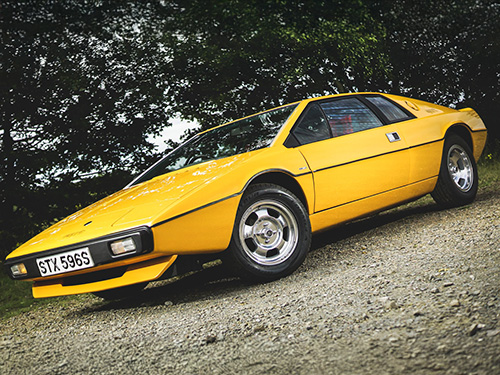
The Lotus Esprit was produced from 1976 to 2004, with many different models and variants developed over its lifespan. These models are broadly categorised into two main design eras: the sharp, wedge-shaped Giugiaro era (pre-1988) and the softer, more rounded Peter Stevens era (post-1987)
Giugiaro Esprit Models (1976-1987)These early models are known for their iconic, sharp "folded paper" design.
Lotus Esprit S1 (1976-1978): The original production model, featuring a 2.0L inline-four engine producing around 160 bhp in European spec. It was famously featured in the James Bond film The Spy Who Loved Me.Lotus Esprit S2 (1978-1981): Featured minor updates like a revised front spoiler, air ducts behind the rear side windows, and a new instrument cluster.
Lotus Essex Turbo Esprit (1980-1981): A limited-edition turbocharged model (45 units produced) with a dry-sump 2.2L engine, special livery, and an aerodynamic body kit.
Lotus Esprit S3 (1981-1987): Featured significant chassis and suspension changes based on the Turbo Esprit, larger bumpers, and a 2.2L naturally aspirated engine.
Lotus Turbo Esprit (1981-1986): The production version of the Turbo Esprit, with wet-sump lubrication and BBS wheels.
Lotus Turbo Esprit HC (1986-1987): A higher compression version with slightly more power and torque. The HCi variant added Bosch fuel injection for emissions-regulated markets like the US. car.
Lotus Turbo Esprit (1987-1991): The turbocharged version of the new shape, using a Renault gearbox instead of the previous Citroën unit.
Lotus Turbo Esprit SE (1989-1993): Introduced a "chargecooled" (water-to-air intercooled) engine, boosting power significantly.
Lotus Esprit X180-R (1991): A road-going race car version with around 300 bhp.Lotus Esprit Sport 300 (1992-1995): A limited-edition (64 units) homologation special for the GT1 race car, featuring a stiffened chassis and AP Racing brakes.
Lotus Esprit S4 (1993-1996): The first Esprit to include power steering as standard. Combined the comfort of the S4 with an engine upgrade to 300 bhp, similar to the Sport 300.
Lotus Esprit V8 (1996-2004): The first V8-powered Esprit, using a compact, in-house developed 3.5L twin-turbo engine producing 350 bhp. Lotus Esprit V8 GT (1997-2001) and Lotus Esprit V8 SE (1997-2004): Two V8 variants, with the GT being more performance-focused and the SE more luxurious.Lotus Esprit Sport 350 (1999-2001): The "ultimate Esprit," a track-inspired, lightweight V8 with a carbon fibre wing and AP Racing brakes; only 50 were produced.
Lotus Esprit "Final Edition" (2002-2004): The last iteration of the V8, featuring a minor facelift with new wheels and round taillights.
CONCERNS:
Gearbox Vulnerability: The Renault UN1 transaxle used in later models is considered a weak point, particularly under hard use. Second and fifth gears are prone to failure, and the shift linkage is often described as vague or "sloppy".
Engine & Cooling:V8 Models: Early V8s suffered from cylinder liner sealant failure, which can lead to catastrophic engine damage and expensive rebuilds (£10k–£15k).
Overheating: The mid-engine layout makes cooling critical; radiators are prone to rot, and fans may seize.
Exhaust Manifolds: These are frequently cited for cracking due to extreme heat and vibration.
Electrical Gremlins: Common issues include "winking" pop-up headlights, seizing electric window motors, and corroded grounding points.
Fuel System: The "saddle" fuel tank design can make refueling slow, and tanks are known to rust or leak over time.
Maintenance and Ownership ConcernsStrict Service Intervals:Four-cylinder: Requires cam-belt changes every 2–3 years or 24,000–36,000 miles.V8: Requires cam-belt changes every 2 years or 24,000 miles.
Running Costs: Annual maintenance typically averages between £1,500 and £2,500, though emergency repairs can easily exceed £4,000 for specialized work like clutch or suspension overhauls.
Parts Availability: While many parts are "bin items" from brands like Toyota or Vauxhall, specific Lotus engine parts are becoming increasingly scarce.Usage: Reliability often improves with regular use; cars left standing for long periods are more likely to develop electrical corrosion and hose/seal failures. For detailed repair procedures, enthusiasts often use the official Lotus Workshop Manuals or community-maintained guides on The Lotus Forums.
Lotus Esprit S1 (1976-1978): The original production model, featuring a 2.0L inline-four engine producing around 160 bhp in European spec. It was famously featured in the James Bond film The Spy Who Loved Me.Lotus Esprit S2 (1978-1981): Featured minor updates like a revised front spoiler, air ducts behind the rear side windows, and a new instrument cluster.
Lotus Essex Turbo Esprit (1980-1981): A limited-edition turbocharged model (45 units produced) with a dry-sump 2.2L engine, special livery, and an aerodynamic body kit.
Lotus Esprit S3 (1981-1987): Featured significant chassis and suspension changes based on the Turbo Esprit, larger bumpers, and a 2.2L naturally aspirated engine.
Lotus Turbo Esprit (1981-1986): The production version of the Turbo Esprit, with wet-sump lubrication and BBS wheels.
Lotus Turbo Esprit HC (1986-1987): A higher compression version with slightly more power and torque. The HCi variant added Bosch fuel injection for emissions-regulated markets like the US. car.
Lotus Turbo Esprit (1987-1991): The turbocharged version of the new shape, using a Renault gearbox instead of the previous Citroën unit.
Lotus Turbo Esprit SE (1989-1993): Introduced a "chargecooled" (water-to-air intercooled) engine, boosting power significantly.
Lotus Esprit X180-R (1991): A road-going race car version with around 300 bhp.Lotus Esprit Sport 300 (1992-1995): A limited-edition (64 units) homologation special for the GT1 race car, featuring a stiffened chassis and AP Racing brakes.
Lotus Esprit S4 (1993-1996): The first Esprit to include power steering as standard. Combined the comfort of the S4 with an engine upgrade to 300 bhp, similar to the Sport 300.
Lotus Esprit V8 (1996-2004): The first V8-powered Esprit, using a compact, in-house developed 3.5L twin-turbo engine producing 350 bhp. Lotus Esprit V8 GT (1997-2001) and Lotus Esprit V8 SE (1997-2004): Two V8 variants, with the GT being more performance-focused and the SE more luxurious.Lotus Esprit Sport 350 (1999-2001): The "ultimate Esprit," a track-inspired, lightweight V8 with a carbon fibre wing and AP Racing brakes; only 50 were produced.
Lotus Esprit "Final Edition" (2002-2004): The last iteration of the V8, featuring a minor facelift with new wheels and round taillights.
CONCERNS:
Gearbox Vulnerability: The Renault UN1 transaxle used in later models is considered a weak point, particularly under hard use. Second and fifth gears are prone to failure, and the shift linkage is often described as vague or "sloppy".
Engine & Cooling:V8 Models: Early V8s suffered from cylinder liner sealant failure, which can lead to catastrophic engine damage and expensive rebuilds (£10k–£15k).
Overheating: The mid-engine layout makes cooling critical; radiators are prone to rot, and fans may seize.
Exhaust Manifolds: These are frequently cited for cracking due to extreme heat and vibration.
Electrical Gremlins: Common issues include "winking" pop-up headlights, seizing electric window motors, and corroded grounding points.
Fuel System: The "saddle" fuel tank design can make refueling slow, and tanks are known to rust or leak over time.
Maintenance and Ownership ConcernsStrict Service Intervals:Four-cylinder: Requires cam-belt changes every 2–3 years or 24,000–36,000 miles.V8: Requires cam-belt changes every 2 years or 24,000 miles.
Running Costs: Annual maintenance typically averages between £1,500 and £2,500, though emergency repairs can easily exceed £4,000 for specialized work like clutch or suspension overhauls.
Parts Availability: While many parts are "bin items" from brands like Toyota or Vauxhall, specific Lotus engine parts are becoming increasingly scarce.Usage: Reliability often improves with regular use; cars left standing for long periods are more likely to develop electrical corrosion and hose/seal failures. For detailed repair procedures, enthusiasts often use the official Lotus Workshop Manuals or community-maintained guides on The Lotus Forums.
Lotus Emira
EMIRA
2021 - present
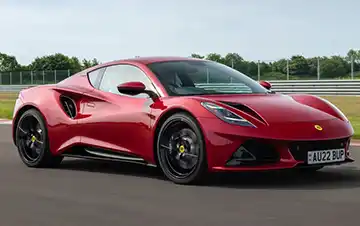
This may be the final combustion-engine poered car produced by Lotus, so if you are a proper petrol-head you might get your head around one. Here are some considerations

Engine & Performance
The Emira is available with two distinct mid-mounted powertrain options:
3.5L Supercharged V6: This Toyota-sourced engine produces 400 hp and is primarily paired with a 6-speed manual transmission featuring an exposed gear linkage. It reaches 0–62 mph (100 km/h) in 4.3 seconds with a top speed of 180 mph.
2.0L Turbocharged I4: Sourced from Mercedes-AMG, this engine produces 360–400 hp depending on the region. It is mated exclusively to an 8-speed Dual-Clutch Transmission (DCT) and can achieve 0–62 mph in as little as 4.0 seconds in the "Turbo SE" trim.
Key Features & DesignChassis & Handling
Built on a new bonded aluminium chassis, it offers two suspension setups: Touring (for daily road use) and Sport (stiffer for track performance).
Interior Technology: A significant leap for Lotus, the cabin includes a 10.25-inch touchscreen, digital driver display, Apple CarPlay/Android Auto, and physical climate controls.
Practicality: Unlike previous models, it includes cup holders, door bins, and storage space behind the seats (200 litres) in addition to the rear boot (150 litres).
CONCERNS:
While the Lotus Emira is praised for its exceptional driving dynamics, early production models (2022–2024) have faced several "teething" issues common to low-volume, hand-built sports cars. Many owners on The Lotus Forums and EmiraForum.com report that while the core mechanical components (Toyota V6 and AMG i4) are robust, the surrounding systems have seen some "niggles".
Electrical & Software ConcernsElectrical issues have been the most frequent source of complaints among early owners:
Climate Control Failures: A common problem involves the heating resistor pack, which can fail if water enters the front vent area (often from power washing). This causes the A/C to either stay fully on or fully off.
Infotainment & Connectivity: Owners have reported frequent Apple CarPlay/Android Auto disconnects and an unresponsive or slow touchscreen. Some units required full ECU replacements to resolve persistent software glitches.Phantom Warning Lights: Many cars trigger sporadic "ghost" warnings for low washer fluid, tire pressure (TPMS), or lighting failures that often disappear after a restart.
Safety Recalls: Official recalls have been issued for malfunctioning windscreen wiper motors and issues with seatbelt tensioners. Mechanical & Build Quality IssuesMechanical concerns often relate to peripheral components rather than the engine itself:Clutch & Gearbox (V6 Manual): Some early V6 models experienced clutch thrust bearing failures or "agricultural" shift quality that required adjustment.
Cooling System "Sand" Issue: There have been reports of casting sand from the manufacturing process contaminating the cooling system, which requires a full system flush and thermostat replacement.
Reliability by ModelV6 (3.5L Supercharged): Generally considered the "safer" long-term bet due to its proven Toyota-sourced engine and simpler manual transmission.
i4 (2.0L Turbo): While the AMG engine is high-performance, some experts note its greater complexity (sensors, actuators, and cooling fans) may lead to higher maintenance needs as the car ages.
The Emira is available with two distinct mid-mounted powertrain options:
3.5L Supercharged V6: This Toyota-sourced engine produces 400 hp and is primarily paired with a 6-speed manual transmission featuring an exposed gear linkage. It reaches 0–62 mph (100 km/h) in 4.3 seconds with a top speed of 180 mph.
2.0L Turbocharged I4: Sourced from Mercedes-AMG, this engine produces 360–400 hp depending on the region. It is mated exclusively to an 8-speed Dual-Clutch Transmission (DCT) and can achieve 0–62 mph in as little as 4.0 seconds in the "Turbo SE" trim.
Key Features & DesignChassis & Handling
Built on a new bonded aluminium chassis, it offers two suspension setups: Touring (for daily road use) and Sport (stiffer for track performance).
Interior Technology: A significant leap for Lotus, the cabin includes a 10.25-inch touchscreen, digital driver display, Apple CarPlay/Android Auto, and physical climate controls.
Practicality: Unlike previous models, it includes cup holders, door bins, and storage space behind the seats (200 litres) in addition to the rear boot (150 litres).
CONCERNS:
While the Lotus Emira is praised for its exceptional driving dynamics, early production models (2022–2024) have faced several "teething" issues common to low-volume, hand-built sports cars. Many owners on The Lotus Forums and EmiraForum.com report that while the core mechanical components (Toyota V6 and AMG i4) are robust, the surrounding systems have seen some "niggles".
Electrical & Software ConcernsElectrical issues have been the most frequent source of complaints among early owners:
Climate Control Failures: A common problem involves the heating resistor pack, which can fail if water enters the front vent area (often from power washing). This causes the A/C to either stay fully on or fully off.
Infotainment & Connectivity: Owners have reported frequent Apple CarPlay/Android Auto disconnects and an unresponsive or slow touchscreen. Some units required full ECU replacements to resolve persistent software glitches.Phantom Warning Lights: Many cars trigger sporadic "ghost" warnings for low washer fluid, tire pressure (TPMS), or lighting failures that often disappear after a restart.
Safety Recalls: Official recalls have been issued for malfunctioning windscreen wiper motors and issues with seatbelt tensioners. Mechanical & Build Quality IssuesMechanical concerns often relate to peripheral components rather than the engine itself:Clutch & Gearbox (V6 Manual): Some early V6 models experienced clutch thrust bearing failures or "agricultural" shift quality that required adjustment.
Cooling System "Sand" Issue: There have been reports of casting sand from the manufacturing process contaminating the cooling system, which requires a full system flush and thermostat replacement.
Reliability by ModelV6 (3.5L Supercharged): Generally considered the "safer" long-term bet due to its proven Toyota-sourced engine and simpler manual transmission.
i4 (2.0L Turbo): While the AMG engine is high-performance, some experts note its greater complexity (sensors, actuators, and cooling fans) may lead to higher maintenance needs as the car ages.
For Lotus performance cars, we offer a wide range of expert services encompassing the maintenance and repair needs of vintage through contemporary cars . We have specialized training and equipment required, and a long history of solving problems with older cars. We have a rich understanding through long association with Lotus.
We can handle anything you require, from routine maintenance to major repairs, overhauls, expedition outfitting, and custom work. Along with our extraordinary staff, we have the very best tools. We have full service documentation for every Lotus product from the late 1950's to the present day. We pride ourselves on our extensive experience with Lotus and serve all of Marin County and the San Francisco Bay Area, including Mill Valley, Sausalito, Tiburon and Novato
We can handle anything you require, from routine maintenance to major repairs, overhauls, expedition outfitting, and custom work. Along with our extraordinary staff, we have the very best tools. We have full service documentation for every Lotus product from the late 1950's to the present day. We pride ourselves on our extensive experience with Lotus and serve all of Marin County and the San Francisco Bay Area, including Mill Valley, Sausalito, Tiburon and Novato
• Working with tight-fitting spaces
• Unique engineering challenges
• Specialist diagnostic and repairs
• Unique transmission issues
• Timing chain tensioner issues
• Track performance
• Clutch wear issues
• Unique engineering challenges
• Specialist diagnostic and repairs
• Unique transmission issues
• Timing chain tensioner issues
• Track performance
• Clutch wear issues
• Refurbish, Repair, tune or rebuild an engine
• Lotus performance diagnostics
• Suspension and rige optimization
• Air conditioning
• Oil leaks and gaskets
• Door lock and latch malfunctions
• Carbon Build up
• Lotus performance diagnostics
• Suspension and rige optimization
• Air conditioning
• Oil leaks and gaskets
• Door lock and latch malfunctions
• Carbon Build up
1: Do I need a Lotus Specialist ?
We recommend that you only have reputable Lotus specialists take care of your vehicle. There are uprated components and unique settings involved. Don’t put your Lotus in the hands of someone who does not fully understand the mechanics and special needs of this car. Your Lotus maintenance should only be performed by people specially trained with the skills and knowledge to give your car expert attention and care.
2: How do I check on Reputation
Check on the reputation of the shop on Google, Yelp and Facebook before agreeing to have repair or maintenance work performed on your Lotus. Talk to people if it's a significant plan of work. Ask friends and professional colleagues about which shop and mechanics they entrusted their Lotus maintenance to. Utilize online resources like Yelp to see what people are saying about Mini repair shops in your area. Then choose the best one based on your research.
3: What is scheduled Maintenance for Lotus?
Regular tune-ups are an important part of your Lotus maintenance. Schedule these at set time intervals between performances of maintenance. Mileage can vary and is not always the best indicator when a tune-up is needed. A combination of mileage, the type of use and time passage is best. Depending on the age of the car, 3- 5,000 miles is a considerable maintenance period, but if you only cover this in 6 months or more, it may be advisable to to take the car in for a check-up.
4: What documents do I need to keep?
Whenever you receive any type of Lotus maintenance, request a list of services performed on the car. Ask for the products used to do each of the services. The products should include brand names, specifications and other identifying information. Put the Lotus maintenance records in the glove box or an other safe and clean place. If there is a problem with the vehicle, you will be glad to have these types of records at your fingertips.
5: Should I expect Free Diagnosis
We offer a preliminary inspection and Diagnosis. Some more complex issues may require considerable work to identify the problem. These will be discussed in advance, if we need to charge for them. Following the tips outlined here, along with those provided in your Lotus owner’s manual will ensure that your Lotus continues to runs well. If you need repair or maintenance work done on your vehicle in Marin County or the San Francisco Bay Area please consider us. We’re friendly, prompt, and offer fair prices that are far below the dealer's. Give us a call or drop us an email, we are here for you.
6: How should I winterize my Lotus Car ?
In the early fall months, have your Lotus winterized by a specialty shop like Ed. Wright’s British Car Repair. Winterizing reduces the wear on the engine during the colder months. Additionally, have the fluids changed and topped off at the end of winter before warmer spring and summer weather temperatures start. This type of maintenance keeps the Lotus operating under optimum mechanical conditions.
7: What should I check myself?
Inspect your tires monthly for even wear-and-tear. Uneven wear on the tires can indicate the need to have the Lotus tires balanced and aligned. Avoid roads and parking lots with pot holes and speed bumps. Familiarize yourself with how to check your oil. It is a basic but vital component of a combustion engine and especially if you have an older car, should be checked from time to time. You can do this in a couple minutes when re-fueling. Note the color should be a light caramel brown. If it's low, or a dark color there may be an issue. If your oil needs topping up, you can ask for help at a service station. If you do it yourself, be sure not to over-fill. You can always give us a call if you are in doubt.
8: What are common issues with Lotus Cars ?
1. FAILED ELECTRICAL POWER STEERING PUMPS
Electric power steering pumps can be prone to failure. If your power steering pump has to be replaced it is a good idea to check out the cooling fan and other related parts while the vehicle is being services, as access is a considerable cost in these small engine bays.
2. TRANSMISSION ISSUES - FLUID REPLACEMENT
Problems with the automatic transmission come down to the manufacturers saying that their transmissions do not need fluid changes. This is a big problem because not changing the transmission fluid will cause it to fail early. Changing the transmission fluid every 30,000 to 40,000 miles will save thousands of dollars in repairs. The CVT transmissions installed before 2008 should have regular oil changes; however the 5 speed automatic transmissions used on most Minis are much more reliable.
3. RATTLING TIMING CHAINS
Timing chains can start rattling. This problem can be worse when the engine is idling. This is a fairly major repair, but do not ignore it or you could end up with some major problems. It seems like this issue is also related to not changing the transmission oil/fluid often enough.
4. WATER PUMP AND THERMOSTAT LEAKS
If your Lotus has over 50,000 miles you should consider replacing the water pump and thermostat. This can save hours of labor if you replace them before finding a leak.
5. VARIABLE VALVE TIMING ISSUES
Performance issue can come up when the oil is not changed enough. The VVT requires a good flow of oil to operate the system. When the oil is not changed, sludge builds up and blocks the tiny passages.
6. MINI RADIATOR SUPPORTS
We suggest changing the oil to allow the detergent in the oil clean the oily supply passages. To prevent the problem, change the oil as soon as it gets dirty, even if it's after a couple of thousand miles. If the passages are not blocked completely this might solve the problem.
7. DAMAGED RADIATOR SUPPORTS
The front radiator support is made of plastic and it supports the radiator, fan, and condenser. It sits very low, and it doesn't take much to damage the support. Just a moderate impact on a high curb can cause a lot of damage. The lower coolant hose sits even lower and if this is hit it can also cause a lot of damage, so be sure to take care when parking your car.
8. CLUTCH FAILURE
Early clutch failures seem to be related mainly to hard use.
Electric power steering pumps can be prone to failure. If your power steering pump has to be replaced it is a good idea to check out the cooling fan and other related parts while the vehicle is being services, as access is a considerable cost in these small engine bays.
2. TRANSMISSION ISSUES - FLUID REPLACEMENT
Problems with the automatic transmission come down to the manufacturers saying that their transmissions do not need fluid changes. This is a big problem because not changing the transmission fluid will cause it to fail early. Changing the transmission fluid every 30,000 to 40,000 miles will save thousands of dollars in repairs. The CVT transmissions installed before 2008 should have regular oil changes; however the 5 speed automatic transmissions used on most Minis are much more reliable.
3. RATTLING TIMING CHAINS
Timing chains can start rattling. This problem can be worse when the engine is idling. This is a fairly major repair, but do not ignore it or you could end up with some major problems. It seems like this issue is also related to not changing the transmission oil/fluid often enough.
4. WATER PUMP AND THERMOSTAT LEAKS
If your Lotus has over 50,000 miles you should consider replacing the water pump and thermostat. This can save hours of labor if you replace them before finding a leak.
5. VARIABLE VALVE TIMING ISSUES
Performance issue can come up when the oil is not changed enough. The VVT requires a good flow of oil to operate the system. When the oil is not changed, sludge builds up and blocks the tiny passages.
6. MINI RADIATOR SUPPORTS
We suggest changing the oil to allow the detergent in the oil clean the oily supply passages. To prevent the problem, change the oil as soon as it gets dirty, even if it's after a couple of thousand miles. If the passages are not blocked completely this might solve the problem.
7. DAMAGED RADIATOR SUPPORTS
The front radiator support is made of plastic and it supports the radiator, fan, and condenser. It sits very low, and it doesn't take much to damage the support. Just a moderate impact on a high curb can cause a lot of damage. The lower coolant hose sits even lower and if this is hit it can also cause a lot of damage, so be sure to take care when parking your car.
8. CLUTCH FAILURE
Early clutch failures seem to be related mainly to hard use.
We have broad experience with most makes of British automobile.
Particularly, with the marques listed below, our experience runs deep, in many cases where we have factory training, certifications and specialized equipment required.
Click on your brand of auto below for more information
Particularly, with the marques listed below, our experience runs deep, in many cases where we have factory training, certifications and specialized equipment required.
Click on your brand of auto below for more information